

Does this sound familiar? You're trying to leave, but your child won't put on their shoes. Then it's a meltdown over which shoes. Then they want to bring three stuffed animals to school. By the time you're finally in the car or standing at the classroom door, watching them cling to your leg when you're late, frazzled, and wondering where the calm, capable kid you know they are went, you're both in tears.
If mornings and drop-offs feel like the hardest part of your day, you're not alone, and we all want a smooth morning and a happy drop-off. I promise your child isn't trying to be difficult; it's not personal, even though it can feel that way sometimes. What you're running into is developmental, and once you understand why it happens, it's much easier to work with it instead of against it.
Why Mornings (and Goodbyes) Feel So Hard
Montessori thinking comes back to the idea that children do best when security and independence are in balance. Push too far toward "just do what I say, right now," and a child pushes back to reclaim some control. A few things are happening at once during this stage:
Children crave order. Predictability isn't just nice-to-have for a three- or four-year-old — it's how they make sense of the world. Even small disruptions to a morning routine can throw a child off more than adults expect.
Children crave independence. Wanting to dress themselves, carry their own backpack, or walk into the classroom on their own isn't defiance, that is the goal of Montessori classrooms.
Separation, and resistance generally, is developmentally normal. Self-control and flexibility are still under construction. So is the ability to say goodbye calmly. Both get easier with practice, not with pressure.
What You Can Try This Week
You don't need to rebuild your whole routine overnight and implement all these strategies at once. A few small, consistent shifts tend to do most of the work:

Keep the sequence the same, every day. Wake up, get dressed, eat, brush teeth, shoes on, out the door — in that order, every time. Consistency solidifies these skills.
Keep the options limited. When giving clothing options, offer only two at a time: two shirts to pick from, two pants to pick from. etc. Pro tip: have one pair of shoes for the season and have a trusted jacket they can wear daily. Keep the fun and different shoes for the weekends!
Prep what you can the night before. Clothes laid out, bags packed, lunch mostly done. Set up a spot by the door for backpacks, shoes, and jackets to save you from the morning hunt.
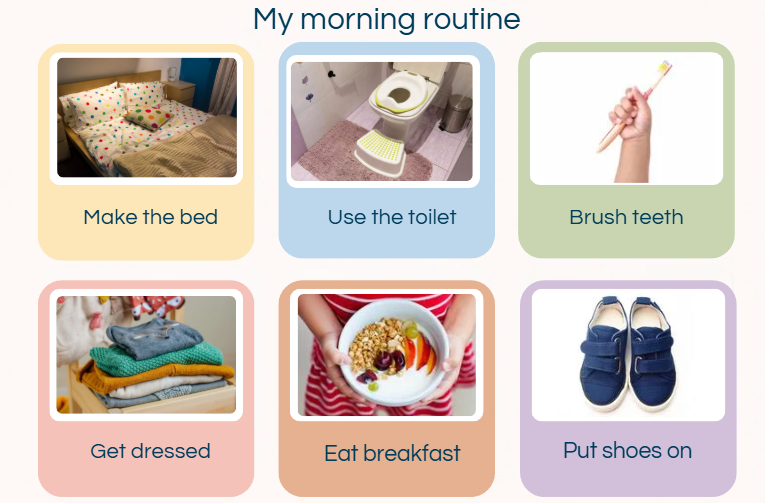
Use a visual routine chart. A simple picture sequence lets your child check what's next instead of you narrating it. It moves the routine from "my parent is telling me what to do" to "I know what comes next."
Get a copy of a visual routine chart here.

Build in independence and the extra minutes it takes. Let them dress themselves (backward shirt and all), carry their own bag, and walk into the classroom on their own. Yes, it takes longer than doing it for them. It also builds the confidence that makes the following mornings easier.
Protect sleep and breakfast. A tired or hungry child has nothing left for cooperation. Bedtime consistency does more for your mornings than almost anything else on this list.
Keep the goodbye short and the same every time. A specific handshake, a phrase, one hug — then go! Lingering or sneaking off both tend to make it harder, not easier. Say the words, acknowledge the feeling if there is one ("I know you are going to have a great day — I'll see you soon"), and trust the classroom guide to take it from there. Most kids resettle within minutes of a parent leaving, even when it didn't look that way at the door.
Model the calm you want back. Kids read a rushed, anxious parent instantly. Five extra minutes and a steadier voice change the whole tone of the goodbye.
Notice out loud when it goes well. "You got your shoes on all by yourself" does more for tomorrow's cooperation than any reminder does for today's.
A Final Word for Parents
Pushback at drop-off is typical. It's your child’s way of asking for a little more certainty, or a little more say. Expect some testing when you first change things up. Children are scientists, and they need to test every hypothesis! Give any new routine about two weeks before deciding whether it's helping.
The goal isn't getting ready faster, getting out the door faster, or even faster goodbyes. It is the joy of having a child who walks into the classroom with a little more confidence, a little more independence, and real trust that you'll be back. Which, not for nothing, also means you might actually get to drink your coffee while it's still hot.
Share:
Six Buckets: The Story Behind The Shared Environment
Bringing Fall Into the Classroom